Thursday, November 06, 2008

Time out, take a break, Dravid!

(Photo from http://content-usa.cricinfo.com/indvaus2008/content/current/player/28114.html)

Dravid's dismal form continues in test cricket. He is already out of the one-day squad. When Dravid resigned as captain, he did so to focus on his batting. Unfortunately, Royal Challengers did not work for him (despite his good innings towards the end, when the challenge was already over). His test cricket form has also gone bad. I think it is time to hand Dravid the Ganguly treatment. Drop him from the squad and get him to make a comeback. This is the same thing he and Chappel did to Ganguly and it seemed to work well. I don't want to rule out Dravid for the future, but he seems to be holding up a place that he needs to deserve again. He has a lot of cricket left in him. Seeing his mates Ganguly and Anil must make him nervous, but he should look at Tendulkar for inspiration.

The best way to get back to form is to play domestic cricket and make a good comeback. I hope Dravid will realize that a break is in his favour and the selectors will hand him one.

Saturday, October 11, 2008

The world economy, history and more

Looking through the great depression in the stock market reminds me of the 2001-2002 days, when the web commerce bubble burst and a recession was on our hands. Are we looking at a recession, we'll from my point of view and many others we are already in it; in fact we are in a worse state. I usually don't talk about the economy, but this time I am very worried

1. Look at India's IIP numbers
2. There is a liquidity crunch (banks are not even lending to each other)
3. Unlike last time, we are in a state where need a huge financial bail out

My brother sent an interesting SMS, which read something like

If my bank returns my cheque quoting "Lack of Funds" as the reason. I won't know if the funds were lacking in my account or in the bank

I do believe in the principle that "Money is hardly ever destroyed", why do I say that?

  1. Wealth is usually created, as we find new resources, work harder, make new products or provide new services
  2. In general money passes hands and is never destroyed
  3. Wealth is sometimes destroyed, when we are hit by natural disasters that cause a loss in property, for example
Assuming that my principle holds, in the sub-prime crisis who made money? Where did the money change hands? Did the rich get richer and the poor get poorer? Did we boost our living standard to a higher standard than should have been?

In retrospective from the 2001 recession, web based commerce emerged back stronger and better. The technology, the pricing and the users matured (there were no more freebies for just signing up, BTW, I missed out on all of those :( ). What can expect to see as we come out of this recession? Will banks and insurance, investment companies be smarter? Will there be new regulations to make sure we don't hit such a crisis again?

Looking at the stock market, this is the third slump I've seen and been bitten by, the other two were

  1. Harshad Mehta's stock scam (I was very small/young then, but I understood what was going on)
  2. 2001 recession
History has taught me to be optimistic and know that we will come out of the bad times, the only thing to do is be patient, be positive and know that these things take a long time to recover, but they eventually do (or else we are doomed anyway, so what choice do I have, but to be optimistic :) ). Such times, test survival and like nature will choose the fittest to survive and learn from the mistakes of those who didn't survive the recession.

It is a cycle and we've hit the negative part of the cycle, the positives should be around somewhere, I hope we turn around quickly. Let's hope and pray that we quickly recover back from this situation and become stronger.

Tuesday, September 23, 2008

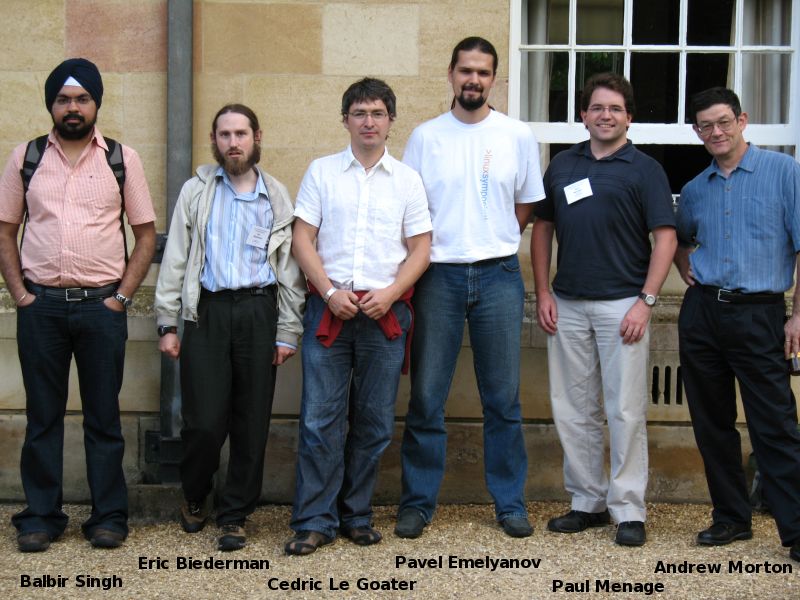
kernel summit 2008 photo on LWN.net

For those who have not seen it yet, it is at http://lwn.net/images/conf/lpc-ks-2008/ks-group.jpg

A thumbnail from LWN.net is included below. There were other photographers hired by Linux Foundation, waiting for them to post their photos and compare :)


Saturday, September 06, 2008

Why I have not blogged in a while

Work and family life have kept me occupied. I just returned from OLS in July and I am currently at the airport lounge waiting to board my flight to Portland to attend the Kernel Summit. After the kernel summit, I go on to attend Plumbers Conference. I expect both events to be very exciting and it is a great opportunity for me to catch up with old friends around Portland.

I am not carrying a camera this time around, I intend to buy a good cheap camera, that can obsolete itself without making me worry about spending too much money on it. Conferences are usually a great time to get a lot of work done, lets see what this trip does to my productivity :)

Monday, July 14, 2008

Quote of the day

"Genius may have its limitations, but stupidity is not thus handicapped"
Elbert Hubbard

Tuesday, May 27, 2008

Fedora 9 and packaging

I ran into a weird issue with Fedora 9 today. Just before leaving home, I shut my laptop lid and headed out. In my auto rickshaw on Bangalore roads, I found my bag heating up. To my surprise, I found that the laptop failed to suspend. When I tried again, I saw a popup that said

Hibernate request refused, the package manager prevented the hibernate operation since it was in the middle on an uninterruptible operation or something similar. I had to manually kill all the packagekit processes and yum before I got the laptop to resume.

I should start filing the BUGS I find into bugzilla soon.

Friday, May 16, 2008

Upgraded to Fedora 9

I eventually took the plunge, upgraded to Fedora 9, the day it was released. What makes my desktop very interesting is that I have an "Nvidia" video card. I upgraded from Fedora Core 8 to Fedora 9. Notice the word core is gone in 9, that's because the core and extras repositories were merged in this release.

I often ask myself, why did I upgrade so quickly - as an after thought. The answer is that I like to try new stuff, I am excited by change, new features, the possibility of getting something better quickly. I think that's the open source philosophy as well "Release early, Release often"

The new features do come at a cost though. I had to spend a few hours trying to bring up my X. Nvidia is not supported as an in kernel driver, there is a proprietary driver for it. Here's what I tried

  1. I used the VESA driver, but I was not happy about the missing graphics acceleration and open GL support
  2. I tried the nvdia driver from livna, but that had other problems - including complaints about ABI not matching. I tried the trick of starting X with -ignoreABI and setting the option in xorg.conf
  3. I wanted to try the driver directly from nvidia, but the kernel compile failed. I got patches from nvidia for 2.6.25 and ran into the same ABI issue. Ignoring ABI was not an option, since the shared library module for the nvidia driver uses a symbol that is now missing with the new X that comes bundled with Fedora 9
Disappointed, I went back to step 1 and I'll wait for the solution to come by or take a shot at a good solution myself. Downgrading X is not a good option, so I am going to hold on to that thought.

While configuring the X server, I remembered my first X install (Slackware, around 1999 or 2000). It came with a utility called xf86config, that asked a set of questions and generated a XFree86 configuration file, with a warning that getting the vertical and horizontal frequencies incorrect could fry the video card. Life is much better with Fedora 9, but not all that easy.

Although, I am beginning to like Fedora better than Ubuntu, Fedora's GUI package management sucks. Yumex is the closest thing it has for sane package management, the gnome based pirut, pacakgeit, etc all leave a user wondering what is going on in the background. I would highly recommend installing yumex and using it as the package manager

Fedora 9 comes with a bunch of kernel features - cgroups, cpu controller, cpu accounting controller and the namespace controller. I had a hand in some of these controllers, but unfortunately the memory controller has been disabled.

Fedora 9 comes bundled with FireFox 3 beta 5 (same as Ubuntu Hardy), FireFox 3 seems pretty cool in terms of user friendliness and stability. Downloading updates can be quite painful, unless you happen to know a very good and fast mirror. Most of the times I've tried to download updates, I get an error stating that the mirror is down or "no such file or directory" or "too many users". I guess that is expected since the whole Linux world is trying to get their hands on Fedora 9.

I found printing to be friendlier and more intuitive. I got errors correctly, stating that my printer was running low on ink or there was a paper jam. The print UI seemed quite robust and stable.

I tried KDE4, only to be a little disappointed. KDE4 on Fedora 9 is definitely much better than it is on kubuntu. Settings are well integrated and one has control over KDE4, unlike kubuntu where the controls are still for KDE3. The reason, I was disppointed with KDE was the interactiveness and latency in terms of response. The new UI is flashy, but most of my widgets failed to work (the comic widget and the dictionary widget, for example). The rendering of gtk based applications is quite poor. Most GUI on Linux seems to use the gtk widget library and some use Qt4. Firefox, eclipse, emacs, etc do not look very nice under KDE. These are still early days for KDE4, I hope it will mature soon into something I would want to use.

OpenOffice 2.4 was pleasantly surprising. As always, they seemed to have improved integration with documents and the generated pdf's look really nice. Usability is much nicer and so is the rendering and interactiveness. I would like to give them a thumbs up for this release. The major difference I saw with respect to Ubuntu's Hardy release was that there was no Sun Logo embedded in the splash screen of OpenOffice. I need to see why Hardy has the Sun Logo embedded.

I am glad to see (this was some time back as well) that Adobe and Google now have Fedora yum repositories, which is a very good sign. I wish nvidia would provide similar repositories.

I've just started using Fedora 9, I'll blog more on it, as I experiment and play with it.

Sunday, April 27, 2008

Knuth's recent interview

Andrew Binstock recently interviewed Knuth. I would highly recommend reading the interview. It was really sad to find out that Knuth has been diagnosed with Prostate Cancer, but here are some my favourite quotations from the interview

"The success of open source code is perhaps the only thing in the computer field that hasn’t surprised me during the past several decades. But it still hasn’t reached its full potential; I believe that open-source programs will begin to be completely dominant as the economy moves more and more from products towards services, and as more and more volunteers arise to improve the code

For example, open-source code can produce thousands of binaries, tuned perfectly to the configurations of individual users, whereas commercial software usually will exist in only a few versions. A generic binary executable file must include things like inefficient "sync" instructions that are totally inappropriate for many installations; such wastage goes away when the source code is highly configurable. This should be a huge win for open source.

Yet I think that a few programs, such as Adobe Photoshop, will always be superior to competitors like the Gimp—for some reason, I really don’t know why! I’m quite willing to pay good money for really good software, if I believe that it has been produced by the best programmers."

"I might as well flame a bit about my personal unhappiness with the current trend toward multicore architecture. To me, it looks more or less like the hardware designers have run out of ideas, and that they’re trying to pass the blame for the future demise of Moore’s Law to the software writers by giving us machines that work faster only on a few key benchmarks! I won’t be surprised at all if the whole multithreading idea turns out to be a flop, worse than the "Titanium" approach that was supposed to be so terrific—until it turned out that the wished-for compilers were basically impossible to write."

"The machine I use today has dual processors. I get to use them both only when I’m running two independent jobs at the same time; that’s nice, but it happens only a few minutes every week. If I had four processors, or eight, or more, I still wouldn’t be any better off, considering the kind of work I do—even though I’m using my computer almost every day during most of the day.

So why should I be so happy about the future that hardware vendors promise? They think a magic bullet will come along to make multicores speed up my kind of work; I think it’s a pipe dream. (No—that’s the wrong metaphor! "Pipelines" actually work for me, but threads don’t. Maybe the word I want is "bubble.") From the opposite point of view, I do grant that web browsing probably will get better with multicores"

"On a positive note, I’ve been pleased to discover that the conventions of CWEB are already standard equipment within preinstalled software such as Makefiles, when I get off-the-shelf Linux these days."

"I currently use Ubuntu Linux, on a standalone laptop—it has no Internet connection. I occasionally carry flash memory drives between this machine and the Macs that I use for network surfing and graphics; but I trust my family jewels only to Linux. Incidentally, with Linux I much prefer the keyboard focus that I can get with classic FVWM to the GNOME and KDE environments that other people seem to like better. To each his own."

"let me just say that almost everything I’ve ever heard associated with the term "extreme programming" sounds like exactly the wrong way to go...with one exception. The exception is the idea of working in teams and reading each other’s code. That idea is crucial, and it might even mask out all the terrible aspects of extreme programming that alarm me."

"I also must confess to a strong bias against the fashion for reusable code. To me, "re-editable code" is much, much better than an untouchable black box or toolkit. I could go on and on about this. If you’re totally convinced that reusable code is wonderful, I probably won’t be able to sway you anyway, but you’ll never convince me that reusable code isn’t mostly a menace."

Saturday, April 12, 2008

Atomic access

I was involved in a set of emails exchanged about per CPU data and atomic access. The argument was basically this

"If you access 64 bit data on a 32 bit machine, what part of the access is atomic?". One would assume that with per-CPU data, it is safe to read the data from a different CPU". The answer lies hidden in the processor architecture. Several RISC architectures require certain types of data to be aligned to specific boundaries (this in turn ensures that the access is atomic). Usually processor manuals suggest that data that is contained within a single cache line is likely to be fetched atomically. Ideally, it is recommended that the data be aligned to the boundary of it's size, so that access is atomic. To explain that further

16 bit data be aligned to a 16 bit boundary
32 bit data be aligned to a 32 bit boundary
64 bit data be aligned to a 64 bit boundary

So the next time you think of atomic access, data sizes, per CPU data, look at your processor manual and determine if the data needs to be protected when accessed from a different CPU.

Wednesday, April 02, 2008

RSS feed is fixed

The RSS feed has been changed to export full content instead of the earlier partial content. The blog should be easier and more fun to read with an RSS reader now.

Feeling left out of the software world

It seems to me that there is a hard barrier between the software development world and the systems programming world. I feel left out of the developments in software that have taken the world over. Agile/Lean programming, EJB, J2EE, .NET, .NET Remoting, JSP, JSTL, Web containers, EJB, MVC, Spring, OpenID, SSO, Indigo, WCF, WPF, Aspect Oriented Programming, Web services, CSS, XML, XSLT, XQuery, ADO, LINQ, AJAX, RSS, RDF, etc. are keywords I hear everyday from my other friends everyday and wonder where I've been while the world has been changing so dramatically?

In retrospect, I've been working on concepts that were quite well understood in the 60's and 70's - Virtualization, Resource Management, Processes, Threads, etc. Concurrency is very interesting, specially due to multi-core now being ubiquitous. My TODO list looks very dull - Python, Algorithms, Architecture of so and so processor, etc.

It seems like there is a hard barrier that prevents people stuck in systems from working in the layer above. I feel left and cut-out from the innovation in the application space. While, I am still finishing up on the basic design patterns, the world has already moved on to domain specific patterns. I do feel lost, but there is hope. Hope that someday, I'll take a look on the other side, where the grass seems greener; jump the fence; make sense of the new world; the world that seems to be moving at a rapid pace.

Wednesday, March 19, 2008

Doing my time outside of systems programming

I spend a lot of time doing systems programming. As humbly as possible I don't claim to be an expert at it. While there is a lot of learning to be done on the systems side, the applications side also drags me to it. I feel I should do my time with them, it's their fair due that I owe them; to understand them better and to appreciate them.


I've just started reading Web Services Essentials. I finished chapter 1, it seemed quite well written and was easily understandable. Unfortunately, the websites listed in the book are no longer accessible. That is quite understandable given that the book was written in 2002.


The other favourite book these days is "C# Precisely". It's a well written compact book. The book consists of 30 sections and you get the feeling that you are learning C# with the least possible time investment. I look forward to putting Mono through the C# precisely test

There are also some other things on my plate that I hope to finish up quickly. I suspect that going through this exercise will give me more debating power to argue for/against technology with my friends and colleagues and also help me appreciate what lies on the other side.

Saturday, March 15, 2008

Ups and Downs from India's Australian Cricket Tour

An Indian Fan's view of the ups and downs

Up

  1. India did well without their seniors in the ODIs
  2. Tendulkar helped India win two finals
  3. Dhoni led from the front
  4. Harbhajan Singh managed to dodge charges leveled against him without evidence
  5. India let Brag Hogg go, even though he used abusive words against the Indian captain
  6. Bad umpiring was penalized. Steve Bucknor got his well deserved punishment for bad umpiring (long due, he seemed biased against India)
  7. Hayden was reprimanded for denigrating an Indian player
  8. Australian public criticized the spirit of the Australian Cricket team for unfair play

Down

  1. Adam Gilchrist, a well respected cricketer retired
  2. Michael Clarke got away, even though he tackled Tendulkar in the finals
  3. Symonds seemed out of form
  4. Ricky Ponting seemed out of form
  5. Australian players got away by claiming catches that they really failed to hold on to
  6. Australian media for looking foolish after every charge they leveled against the Indian team players were waved off

Thursday, February 14, 2008

Linux 2.6.25-rc1 (new features)

I am extremely glad to see 2.6.25-rc1, specially due to some of the new features that I've added.

A list of features is mentioned in the LWN article about the merge window for 2.6.25-rc1. This includes the memory controller (now called memory resource controller). Check out http://lwn.net/Articles/268937/ as well. We also got fake NUMA nodes for PowerPC and many other small fixes.

I have a new favorite website for git changelogs http://tree.celinuxforum.org/gitstat/index.php

Check out some of the cool graphs from that website

Sunday, February 03, 2008

Bhaskara's proof of the pythagoras's theorem


Bhaskara's Proof

Bhaskara's proof (1114 AD) of the theorem follows from the figure


So simple, elegant and beautiful. I wish I was aware of this proof as a student

Wednesday, January 09, 2008

Favourite Quote for the Day

Loosely speaking we can think of automata, grammar and computability as the study of what can be done by computers in principle, while complexity addresses what can be done in practice.
Peter Linz

Monday, January 07, 2008

Crazy mathematics

As I was shifting my books from one location to another, I found a big heap of books, I had not even started reading or looked at in detail. Being me, I got distracted by them and decided to at-least give them a chance to fulfill their destiny (to be read cover to cover by their owners or the friends of the owners).

I started with Tom Apostol's Mathematical Analysis. It is a wonderfully terse book and I found myself struggling by the time I reached the topic on "Point Set Topology". I had been through a quick journey of the past - real and complex numbers, sets and cardinality, prime numbers and many more things.

I also ran into the famous Cauchy-Schwarz inequality. I remember having proved the inequality in the exercise of Don Knuth's Art of computer programming volume I, but by now I had forgotten it all -- the sum manipulation, the whole of chapter 1 as hiding somewhere in my memory and seeking it was a hard/impossible task. This time, I found myself taking the help of a symbolic computation package - maxima. My dialog was as follows

(%i2) expand((a1^2 + a2^2)*(b1^2 + b2^2));
(%o2) a2^2*b2^2+a1^2*b2^2+a2^2*b1^2+a1^2*b1^2
(%i4) expand((a1b1 + a2b2)^2);
(%o4) a2b2^2+2*a1b1*a2b2+a1b1^2

(%i31) (a1^2 + a2^2)*(b1^2 + b2^2) - ((a1b1 + a2b2)^2);
(%o31) (a2^2+a1^2)*(b2^2+b1^2)-(a2b2+a1b1)^2
(%i32) expand(%);
(%o32) a2^2*b2^2+a1^2*b2^2+a2^2*b1^2+a1^2*b1^2-a2b2^2-2*a1b1*a2b2-a1b1^2

To cut the long output short, I ended up with Lagrange's inequality.

This is just a small part of the mathematics I have to (re)learn, there is also graph theory, game theory, probability theory, Markov chains and theory of computation.

All the mathematics is very exciting, but time consuming. I have loads of other information to read and digest. Let's see where all this I need to learn this crazy math attitude takes me.

Tuesday, January 01, 2008

Have a fantastic new year 2008

It's that time again, a year has gone by, brought happiness and sad moments, but it's gone! Remember to change the year in your dates, make new year resolutions, start afresh, be more positive, thankful and happy that we have a new chance to do/make things right.

HAVE A GREAT NEW YEAR and make every day count

Saturday, December 29, 2007

Rusting Knowledge

Over a period of time, it seems like a layer of dust covers your deep understanding and knowledge of a subject matter, where in once I was considered an expert. My knowledge is rusting and it's time to re-read some old classics and books I used to learn the subject matter from.

I've been trying to learn C#, Python, etc, but I realize that I need to revisit my C skills and my C99 knowledge base again. In summary, knowledge rusts over a period of time, specially the items not practiced very often.

Get ready to clear away the dust from your rusting areas as well, as I explore well known areas and newer areas with a "I used to know, but forgot" perspective.

Monday, December 24, 2007

Digging out of history (longjmp is bad)

I had this program written out a long time back, it shows why some constructs are valid, but do not apply well today. In the evolution of C++, we've left behind some holes


 1 #include <stdio.h>
 2 #include <setjmp.h>
 3 #include <string.h>
 4
 5 class C {
 6 private:
 7         char *ptr;
 8 public:
 9         C (const char *name) {
10                 ptr = new char[strlen(name)+1];
11                 printf("constructed C\n");
12         }
13
14         ~C () {
15                 delete [] ptr;
16                 printf("destroyed C\n");
17         }
18 };
19
20 void funfunction(jmp_buf env)
21 {
22         C c("Hello");
23         /*
24          * Do something, at the end expect destructor to be
25          * called
26          */
27         longjmp(env, 1);
28 }
29
30 int main(void)
31 {
32         jmp_buf env;
33         int ret;
34
35         ret = setjmp(env);
36         if (ret) {
37                 printf("Looks like we jumped a long way\n");
38                 return ret;
39         }
40
41         funfunction(env);
42         return 0;
43 }


See if you can find the obvious problem with this code

Saturday, December 22, 2007

Sounds in my life

The gentle and shrill sounds in my everyday life, call my attention to them. In earlier days, the only sound that one would hear is of people talking to them, children playing on the street or a baby calling for Mama's attention.

Compare and contrast that with what we hear today; the sound of the TV, the microwave, radio, music player, sound of vehicles zooming on the street, vehicles blowing horns, the telephone, the cell phone trying to tell you someone wants to talk to you (even when you are in the restroom), this someone could be a pre-recorded sales call; the computer buzzing to tell you that someone is trying to reach you through instant chat, the courier person ringing the doorbell, the alarm-clock ringing on my cell phone

How am I supposed to listen to myself and others around me; with these distracting sounds calling for my attention. We have moved into a new era, where we need more sounds to tell us, that we are needed elsewhere. I need to filter these sounds, so that I can hear my heart-beat, the pin-drop and my those around me giggle and laugh.

Thursday, November 22, 2007

Guess what OS Don Knuth runs?

Check out http://www-cs-faculty.stanford.edu/~knuth/news.html

In the section "Wanted: A Name For High-Tech Grief" Knuth states and I quote

"I myself have often cried out for help to colleagues who have generously made house calls, in order to unwedge my highly customized Linux system"

We've known it for a while, looking at the customized fvwm2 configuration on Knuth's website, but it's good to see it in writing.

Some of you must be thinking, he has problems with Linux? We'll look at the keywords -- highly customized. Can't do that with other operating systems without hitting yourself in the head a few times or hitting your head against something. You don't hit yourself because your stupid, you do, because you brought the product :-)

Hmmm.... Now, if we can get everyone who has directly or in-directly been benefited from Knuth's work to run Linux, that would be a wonderful starting place. Of-course regular users are more than welcome to adopt and customize Linux.

Linux is a Trademark of Linus Torvalds

Tuesday, November 06, 2007

FOSS.IN delegate registration is open


Register at http://foss.in/2007/register/delegates/

The fee structure has changed this year. Do read the details before registering. This year we have project days and the main conference

Saturday, November 03, 2007

Talk at VTU

I gave a talk on Introduction to Operating Systems via EDUSAT. The lecture was broadcast to several universities via satellite. I had no live audience, but it was fun to speak into a camera. The video has been stored/archived for students to see later.
Here's a link to the slides

New Code in the Linux Kernel

I got some new code included into the mainline linux 2.6.24-rc1 kernel

cgroupstats - Is an infrastructure to allow sending control group statistics to user space using taskstats/genetlink
cpu_acct - CPU accounting subsystem for control groups

Worked on some other miscellaneous stuff as well. Overall, 2.6.24 was an interesting merge cycle, lots of new stuff went it. Check it out! Please do report regressions

A Quick Estimate

I was trying to estimate how long it would take for a timer, measured in nano-seconds using 64 bits would take to roll over. Here's my quick estimate

It would take 2^64/10^9 seconds = 2^64/2^9*5^9

Approximating on all calculations

= 2^55/5^9

5^3 = 125 ~= 2^7
5^9 = 2^21

= 2^55/2^21

= 2^34 seconds

2^34 seconds = 2^34/86500 days ~= 2^34/80*2^10 = 2^24/2^6 days = 2^18 days

1 year = 365 days, 3 years ~= 2^10 days

That leaves us with 2^8 years * 3 years

= 256*3 years before the timer overflows

With a machine, usually one would expect at-least one reboot in 800 years, if so, we would be fine for a long time to come.

See I need no calculator :-)

Saturday, October 27, 2007

FOSS.IN list of talks announced

Check out http://foss.in/2007/shortlist.php

The list of talks looks really good and I know a lot of people presenting at FOSS.IN. I am co-presenting on one topic. I'd say this year FOSS.IN is going to rock, so make sure your there.

Monday, October 08, 2007

India vs Australia (quick analysis)

India won the T20 world cup and became champions! The 50-50 games seem to be a different playing ground for the Indian Team. Have you been wondering why India did not fair so well, so far. Here's a quick layman analysis

  1. India have not been batting first, in all the T20 matches we won, we batted first!
  2. The team has changed and so have the rules. Instead of a powerplay for 20 overs with catch in fielders around, T20 has restrictions for just 4 overs. This makes a big difference to players like Sehwag and Gambhir, who I think are more suited to the field being well spread out (survive longer)

Here's some advice for the Indian Team (given that Dhoni reads cricinfo, you never know if he might read this blog as well :-) )

  1. Convert the 50-50 match to a 20-20 match, by keeping wickets in hand till the 30th over
  2. While batting second, get Dhoni in at #3, followed by Yuvraj at #4
  3. Get Dravid to Open the batting while chasing
  4. Tendulkar should come 4/5 down while chasing (when there is a mandatory ball change)
  5. Don't ever get Yuvraj to Bowl :-)
  6. While bowling first, attack aggressively, even if it means that more runs will be conceded

Friday, October 05, 2007

Memory Ordering (Recommended Reading)

I just finished reading this wonderful report on memory ordering. I highly recommend reading it. If you have anything to do with multi-core, multi-processor, parallel programming, you'll find the paper very insightful.

Other good to read papers/articles on memory ordering from Paul Mckenney are
  1. C++ Data-Dependency Ordering. May 2007.
  2. Overview of Linux-Kernel Reference Counting. January 2007.
  3. A simple and efficient memory model for weakly ordered architectures. Makes case for weakly ordered primitives in programming languages. Updated May 2007.

Wednesday, September 26, 2007

Doing the simple things first

I've always been lost trying to understand and do the complex things. I just realized that I miss out on doing and enjoying the simple things in life. Note to self, remember this and change.

Tuesday, September 25, 2007

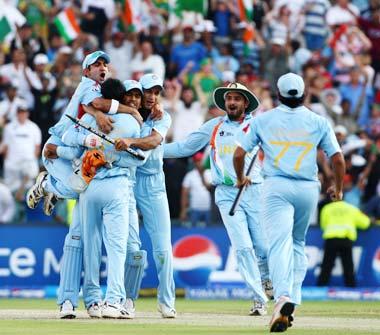
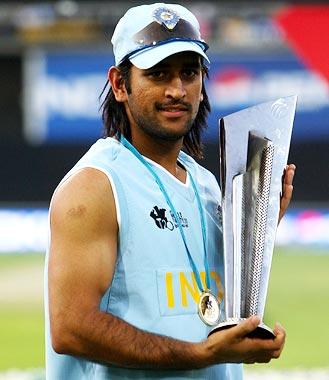
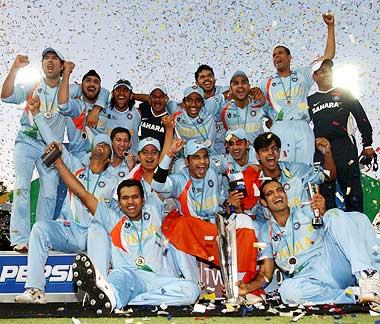
India are Twenty20 champs


No one expected it, but secretly hoped for it; and it has happened. India are twenty 20 world cup champions. Boy, has this been a good time for sports. For those of you who do indeed know that hockey is our national game, spare a moment for this picture as well


Spare some time and visit http://www.bharatiyahockey.org/ and http://www.indianhockey.com/.

Now shifting back to twenty20, India beat Pakistan twice and the second win won us the cup. Both matches were close, nail biting (warning: watch your hygiene) finishes. Surprisingly, India got extremely lucky and batted first in almost all their encounters which they won. The statistics show a remarkable quality, that has been missing before, this was a true team effort. Everybody chipped in; in the batting department, we had contributions from Gautham Gambhir, Virendra Sehwag, Robin Uttapa, Yuvraj Singh, M. S. Dhoni, Rohit Sharma (who incidentally is yet to be dismissed in this form of the game). Karthik was a weak spot in the team, but boy did he keep well in the game against South Africa. In the bowling department, R. P. Singh, Irfan Pathan, Harbhajan Singh and Sreesanth were the key contributors.

India's fielding has been quite good, thanks to the absence of Saurav Ganguly, V.V.S. Laxman and Munaf Patel.

I am sure Dhoni is thinking मै तो युहीं चाला था बिना जाने मंज़िल मगर लोग आते गये और कारवाँ बंता गया |

Well done, keep up the good work boys!

Friday, September 07, 2007

Kernel Summit Photos - taken by Evgeniy Polyakov


Peter Zijlstra, Ingo Molnar, Venki Pallipadi and Balbir Singh in discussion

More photos will follow, including the group photo. Meanwhile, there are other photos at Evgeniy Polyakov's gallery.

Thursday, September 06, 2007

Kernel summit day 1 updates

Gerrit has some wonderful updates in his blog Linux and Open Source. LWN.net subscribers can read the summit update at 2007 Kernel Summit article right away or wait for a week for it to be available to public.

Friday, August 31, 2007

Off to VM and Kernel Summit

I've been invited to the VM (Virtual Memory) Summit in Cambridge, U.K. I will also be attending the Kernel Summit which is being held along side LinuxConf Europe 2007. Hopefully, I'll have interesting notes and pictures when I am back.

Algorithms dictionary online

http://www.nist.gov/dads/terms.html is a wonderful dictionary of terms and concepts in Algorithms. It's a wonderful dictionary and the references are excellent. I wish they made the content available as a book or a PDF document.

Monday, August 20, 2007

Perl module for taskstats

Way back last year, we developed the taskstats and delay accounting interface for the Linux Kernel. There is now a CPAN module to extract the same information using perl (all our example programs are in C). It's called Linux::Taskstats::Read. It can read the binary dump of taskstats information and interpret it.

Here's the module

I hope to be able to write a python interface for taskstats as well and do it quickly. I am sure someones already done the work.

Friday, August 17, 2007

Celebrating 50 years of IBM Technical Journals

" Since the first publication of the IBM Journal of Research and Development in 1957 and the IBM Systems Journal in 1962, these Journals have provided descriptions and chronicles of many important advances in information technology and related topics ranging from atoms to business solutions. To celebrate the 50th anniversary of the IBM Journals, this report highlights a selection of significant papers published in the Journals, along with brief commentaries. The Journal editors chose papers which were very highly cited in the technical literature, described technologies of historic significance, or provided an important overview of a field"

Get the articles at 50 Years of IBM Technical Journals

Thursday, August 02, 2007

An LWN.net article about my work

LWN is covering my memory controller work this week. The article is subscriber only, but I've managed to get a free link (legally of-course). Please do view the article, the work and consider subscribing to LWN.net

Here's the article Controlling memory use in containers

Thursday, July 12, 2007

This week from the Wikipedia

I've just discovered my favourite Wikipedia page for this week. It's the page on problem solving. Don't wait, go ahead and read it!

I highly recommend glancing through the external links and reading them later at leisure.

Saturday, June 30, 2007

OLS presentation

I just finished my first OLS presentation on Containers: Challenges with Memory Resource Controller and Its Performance

The presentation went well, it's all been recorded. Hopefully the proceedings will show up soon.

Friday, June 22, 2007

Wednesday, June 20, 2007

M.S. Thesis

M.S.Thesis available

I've finished my M.S. Thesis and you can find it here NOTE: The thesis might still have errors and I do not have any immediate plans of fixing the errors. The thesis was typeset using LaTeX. Hopefully, you'll enjoy reading it.

The figures require some fixing, hopefully, I'll redo them in MetaPost later.

Monday, June 18, 2007

MS (Software Systems)

I received my MS degree from BITS Pilani today. Wow! I am now qualified to do more, I feel so energized. As I am writing this blog, I look at the pile of books of my M.S. curriculum and the dissertation report of the final semester. Flashing in front of my eyes are my last minute attempts to read up a whole book in a week, my stupidity in believing that an open book examination can be passed by carrying along enough books.

Anyhow, that is the past and I learnt a lot from it. As I sit here and examine the past, I know that the process of learning never ends, but learning the same thing is rarely fun (a.k.a repeating your mistakes). But as my copy of Don Knuth's The Art of Computer Programming tells me, I'll never learn anything at once, I'll need to learn somethings during the next reading; I realize that I've just completed a small milestone in a long journey.

Thursday, May 24, 2007

TUGboat archives

I recently rediscovered the TUGboat archives

There is a really interesting article in the 2007 archives
"A beginner's guide to METAPOST for creating high-quality graphics", the article points to a metapost previewer at

http://www.tlhiv.org/cgi-bin/MetaPostPreviewer/index.cgi

Any newbie experimenting with MetaPost should use the previewer, it's fun and easy and of-course one need not worry about the installation details.

Part of the inspiration for looking up TUGboat came from Kevin Larson's article on the Technology of Text. The article is well written, but it completely ignores TeX and METAFONT. That reminds me, time for a letter to the editor.

Thursday, April 19, 2007

Blog in Hindi

अब मै हिन्दी मे भी ब्लोग कर सकता हूँ !

If you cannot see this well, check out

Wikipedia Article on Indic Fonts
and
Blogger help for Hindi

Monday, April 16, 2007

Balbir's Blog: It's prediction time!

Balbir's Blog: It's prediction time!

I am so excited and in pain to see prediction 5 of this years prediction come true! I am curious to see how the others will turn out :-)

Saturday, March 24, 2007

Reserving space for my good bye to the Indian Cricket Masters

Dravid, Ganguly, Tendulkar should go now! Dravid and Tendulkar must go for sure and so should Mr Greg C. Let's see how the Indian team responds to this defeat.

Thursday, March 01, 2007

Balbir's log 1st March 2007

  1. Read a very interesting algorithm called the Ford-Johnson method for sorting. I ended up opening Knuth's Volume 3: Sorting and Searching and reading through his quite amazing illustration and explanation of the method.
    • References - Don Knuth, vol 3, 3rd Edition, Page 184
    • Horowitz and Sahni, Fundamentals of Computer Algorithms
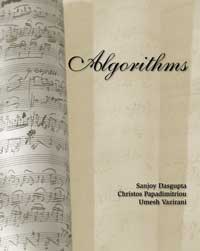
  2. Read through the introduction in the Algorithms book by Papadimitriou, et.al. See my post on a fun way to multiply numbers
  3. Played around with the python programming language after a big break

Follow up: A fun way to multiply numbers

Here's python code to multiply numbers as mentioned in the A fun way to multiply numbers blog entry.

NOTE: I am not a python expert, so there could be some obvious bugs in this simple piece of code. As always use at your own risk.


print "Input the first number"
a=input()
print "Input the next number to be multiplied with %d" %a
b=input()
res=0
while a:
if a & 0x1:
res = res + b
a = a >> 1
b = b << 1

print "The result is %d\n" %res

A fun way to multiply numbers


Reading through the algorithms book by Papadimitriou, et. al has been great fun. I learn a great fun way to multiply (apparently known from ancient times). Let's say we intend to multiply 13 and 23, the procedure is quite straight forward. Write down 13 and 23 besides each other
13 23
6 46
3 92
1 184

The first column is divided by two (with rounding) and the second one is multiplied by two


13 23
6 46
3 92
1 184

Strike out the numbers with even numbers in the first column

Now we just add up the numbers in the right column to obtain 299. That's quite easy right? The really cool thing about this approach is that is easy to implement using computers (hint: left shift and right shift multiply and divide the number by 2 (with rounding taken care of))

Balbir's log - 28th Feb 2007

  1. Freshly installed FC6 - 32 bit edition, still in the process of setting it up (another blog entry). I hope to get KVM and UML running
  2. Played around with Linux's Connector interface (kernel <-> user communication)
  3. Read through chapter 5 (partially) of Computer Systems Performance Evaluation and Prediction

Tuesday, February 27, 2007

Balbir's log - 27 Feb 2007

  1. Played around with Scilab, used scilab for some simple signal processing work, Amplitude Modulation.
  2. I've started reading a paper on VM entitled Making LRU friendly to weak locality workloads
  3. Added Markov chains to my to-learn list

Saturday, February 24, 2007

Using maxima -- baby steps

The use of symbolic computing makes it easy to visualize and solve problems that were otherwise dry and would put you to sleep. To test the simplicity of a freely available tool called maxima, I tried to solve a common problem with it.

The problem is quite simple, remember high school physics? Well I don't :-). Consider a tuning fork, which oscillates and produces a sound (depending on it's frequency).

We start by entering the mathematical model of the fork

'm*diff(x(t), t, 2)=-k*x(t);

Maxima prints


We now request maxima to solve the equation for us by

desolve([%],[x(t)]);

Maxima asks

Is k * m positive, negative, or zero? We say positive

Maxima prints


We ask maxima to simplify the result for us

radcan(%);

Maxima outputs


That's it, we have our solution.

Tuesday, January 30, 2007

What have I been upto?

I've spread myself quite thin, with a lot of code to write, books to read, things to buy and documentation to write.


For now, I have started reading Structure and Interpretation of Computer Programs. I've started reading it, don't skip the foreword or the preface. Be patient with the author and go read it, it's fun!

Meanwhile, I hope to get back to productive coding soon, instead of just reading hundreds and hundreds of papers.

Tuesday, January 23, 2007

One of the hardest problems software faces today

I think the biggest problem is to get users to read the documentation associated with the software.

Try answering these questions and score yourself.

  1. How many times have you seen a question about a problem being repeated?
  2. Why do you they created FAQs?
  3. How many FAQs have you read?
  4. What was the last release notes you read?
  5. Which book did you read last (not related to your course)?
  6. What new techniques did you read and discover in the last two years?
  7. What kind of documentation did you write and share for your last project?
  8. What was the last software manual you read?
  9. What was the ratio of comments to code in
  • Programs you wrote
  • Programs you read


The answers to these questions might not be a simple yes or no, but it will give you a fair idea of how we programmers are lazy and totally ignore documentation.

Sunday, January 14, 2007

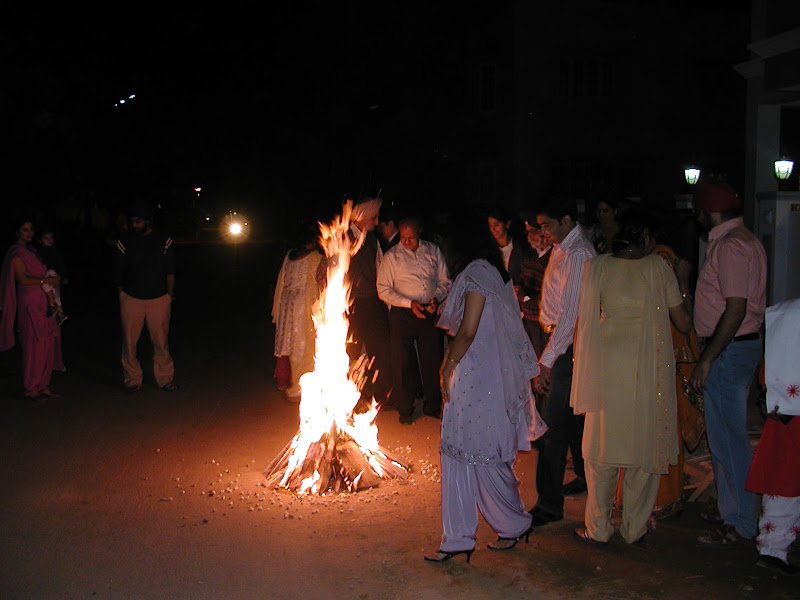
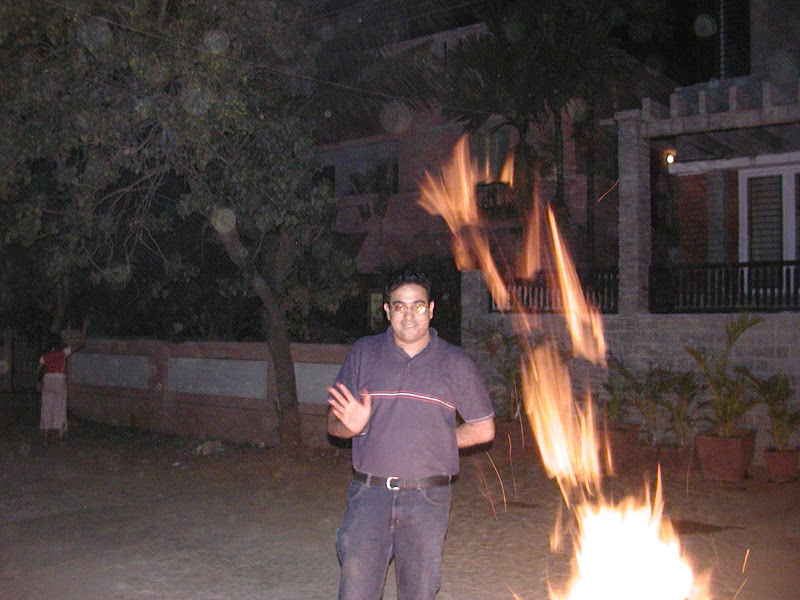
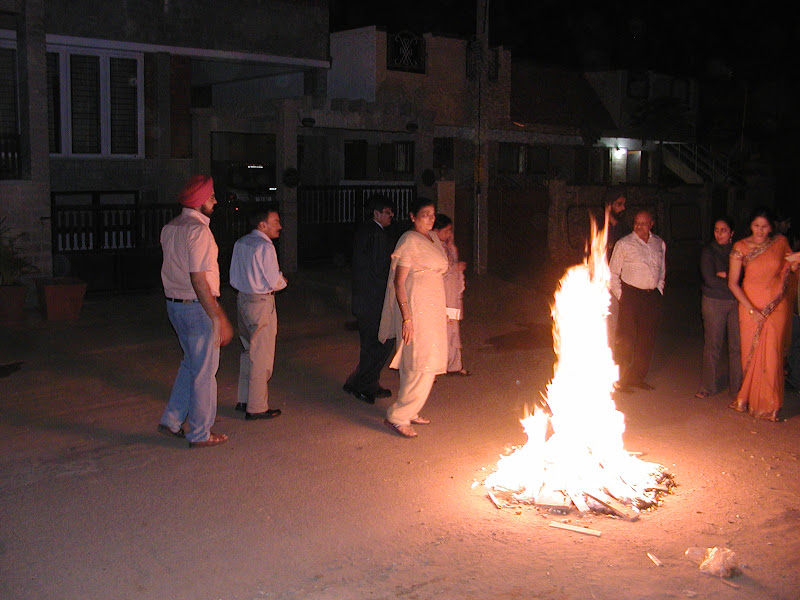
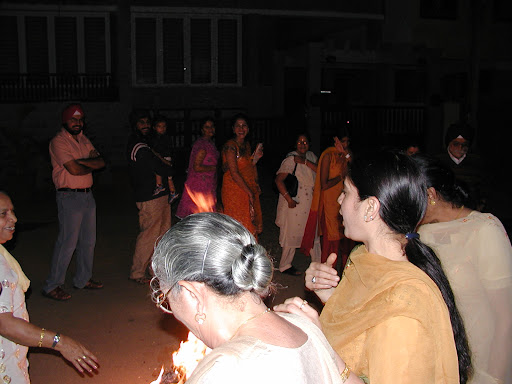
Some pictures from our New year and Lohri celebration (A Story!)


Me and my gorgeous wife before we left for the new year party

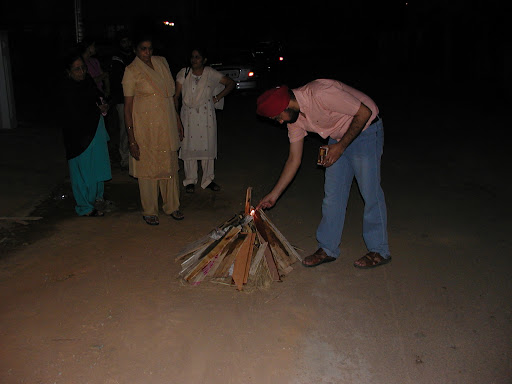
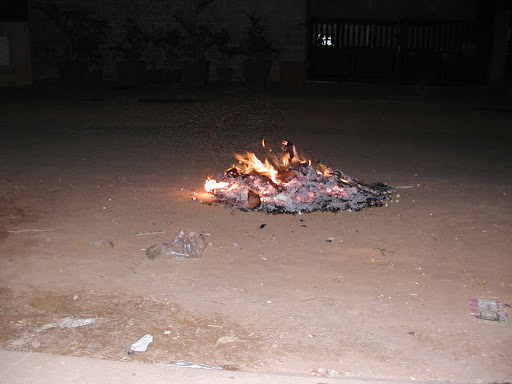
I sparked off the Lohri celebrations

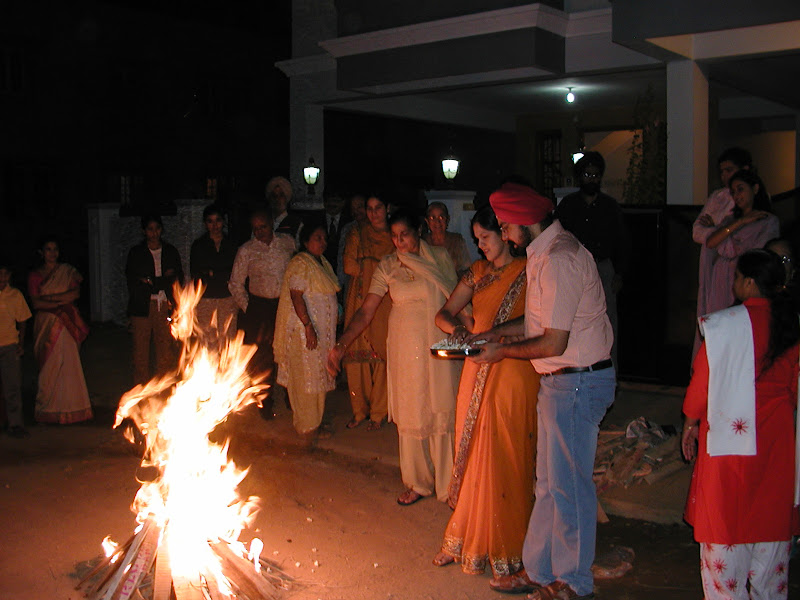
Popcorn and Peanuts in fire
A Lohri ritual


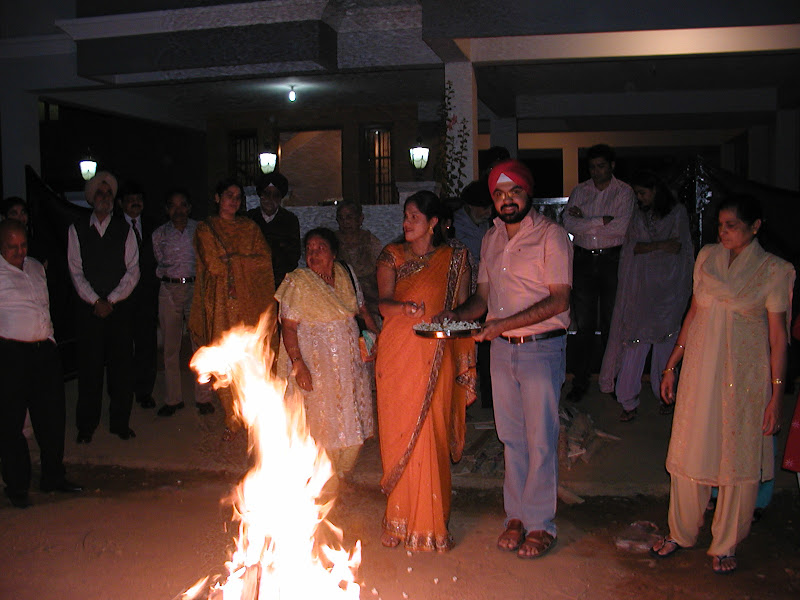
The flames got higher, lohri had now begun

Ritual walk around the fire

The crowd got bigger as the flames got higher

My brother enjoyed the heat

My in-laws got involved as well
(My brother-in-law, his wife and son)

I had to keep encouraging people

The last round

There was only so much firewood!

It was time for dinner
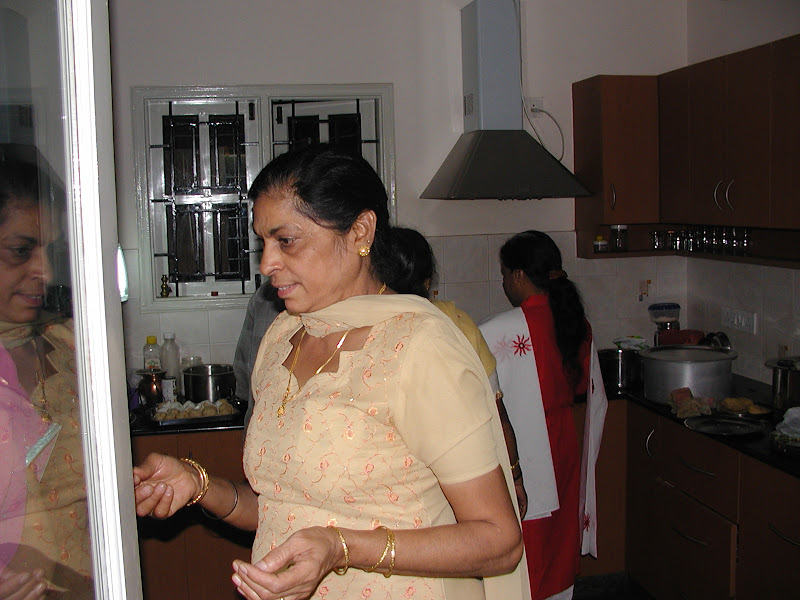
(The chef was ready!)

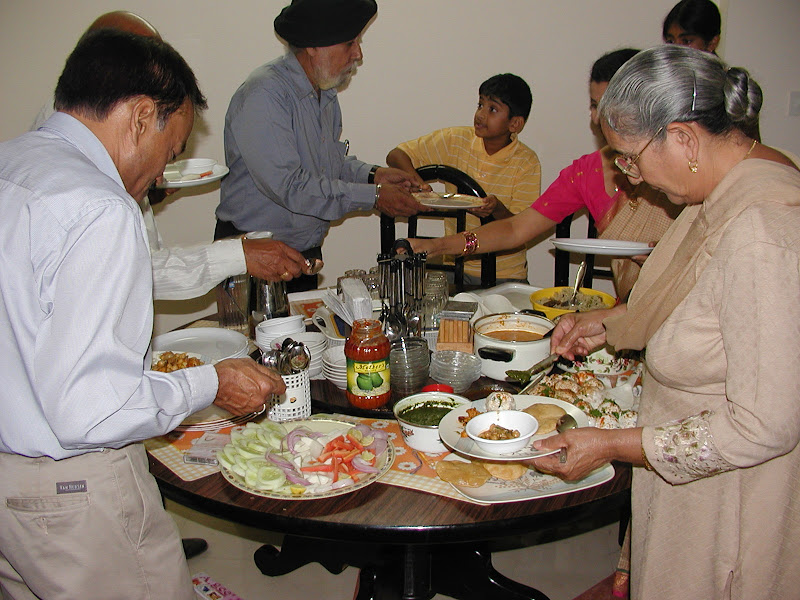
Dinner was served, the food was awesome!

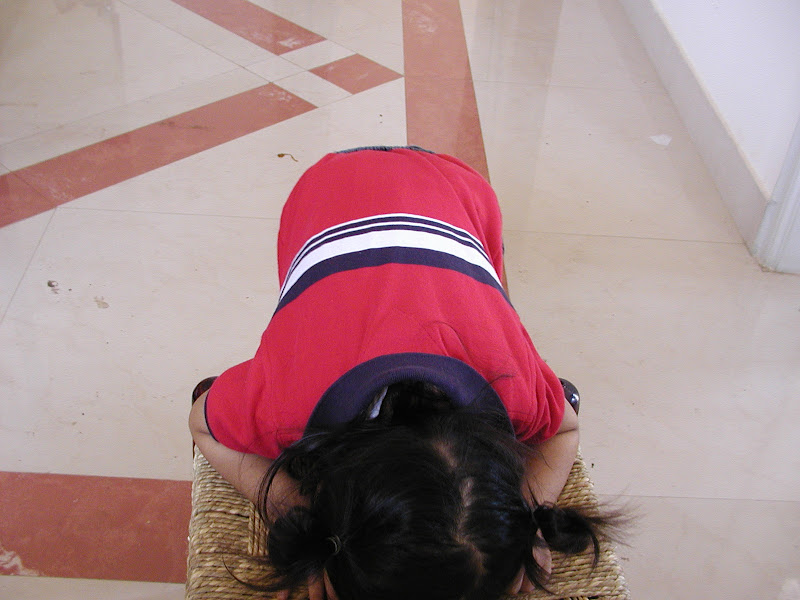
My wife's nephew, he came, he saw

He bowed!

Saturday, January 13, 2007

Happy Lohri

Mufli ki khusbu, gurh ki mittaas
Makki ki roti aur sarson ka saag
Dil ki kushi aur apno ka pyar
Mubarak ho apko Lohri ka thyohar!

If the whole thing bounced over you, see http://www.lohrifestival.org/. We are celebrating our first Lohri

Friday, January 12, 2007

Article: A Conversation with John Hennessy and David Patterson

Read A Conversation with John Hennessy and David Patterson published in ACM Queue. It's one of the best articles, I've read lately. They talk about the challenge with parallelism, the free ride software has had, their new book, new projects and much more.

I highly recommend reading the article

Sunday, January 07, 2007

It's prediction time!

It's come a little late this year, but here goes anyway. The list includes technology, business and other predictions for the year 2007

  1. Apple will go back to using the PowerPC
  2. Intel will gain an upper hand over AMD in the 64 bit space
  3. Microsoft (R) Vista (TM) will not be widely accepted, people will expect too much from it
  4. Internet Explorer 7 will do well, but will begin to loose out gradually towards the end of the year
  5. India, Dravid, Chappel and Tendulkar will have a rather forgivable (we'll loose out before the semi-finals) world cup
  6. The world will get ready to move to 128 bit computing, there will be rapid growth towards 1024 bit computing machines
  7. Adobe, Google and Apple will continue to do well
  8. Open source movement will slow down for this year

These predictions are not very scientific, they are based on gut feeling. Feel free to comment on any of the predictions. I'll try and keep the list up to date or add your predictions if I really like them

Monday, January 01, 2007

Have A Great New Year!


Let's all welcome the new year with a big smile! I hope it turns out to be a great year for us, our families and friends, and all of mankind. There are so many things to do, so let's get started!

Thursday, December 28, 2006

Quote of the Day

The creation of standardized, vendor-independent operating systems, such as UNIX and its clone, Linux, lowered the cost and risk of bringing out a new architecture

David Patterson and John Hennessey

Monday, December 25, 2006

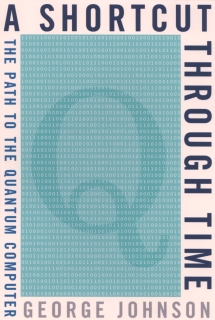
A shortcut through time

Written by science writer George Johnson, this book talks about mans quest for the ultimate computing machine, the Quantum Computer.


The books begins with the basic of computing, the language used is quite amusing

"In a typical circuit, there were resistors that, true to their calling, resisted electricity, pinching the flow of electricity"

The book starts off with the authors experience with GENIAC, a mock clone of ENIAC. The author then explains, tinkertoy logic, the book helps the reader discover that computers are more about logic, more than semiconductors that are used to build them. Logic is more important than how it's actually implemented.

The book then dwells into physics, explaining how atoms spin, and how depending on the direction of spin, we can treat the spinning as a boolean quantity as 1, 0 or Φ. Φ represents the state of the atom, when it is spinning in both directions simultaneously.


The introduction to Quantum physics makes a good read and makes me wonder why I slept through Physics in school. Reading further through the book the author aptly states "Human brains are just not equipped to intuitively understand the subatomic rules". The author then takes you to the Aha! Moment, when you realize that the Quantum Computer is so powerful that it can carry out 2n computations simultaneously, where n is the number of computing bits.

The book then introduces the layman to the Turing Machine and computational complexity, followed by Cellular Automata, Shor's Factoring Algorithm and its application to the world of Quantum Computing. No mathematical proofs are included in the book, but the concepts are well illustrated with examples and supporting diagrams.

Cryptography is then introduced along with the challenge of decrypting code, the computational complexity of cryptanalysis and implications of a quantum computer on current security technology is discussed.

What follows is an elegant description of logic gates and reversible logic. The current and state of the art attempts made at building a quantum computer are described in detail. Quantum error correction, its need and challenges is also discussed.

The book closes with chapters on Quantum secrecy and describes how polarized photons are used to implement quantum cryptography. Real life examples of hard problems, like protein folding is discussed. The reader is introduced to the fact that protein folding is a hard problem to solve (see books on NP-Hard) and the mystery surrounding how nature is able to solve the problem so quickly is discussed.

In summary, this is a great book to read. If you know and understand computer science, it will expose you to how, some of the most complicated concepts can explained without the need for complex mathematics. If you do not understand Quantum computing, the concepts exposed will get you interested in the world of Quantum, where the laws of nature are different. Simple Newtonian physics cannot explain what goes on inside an atom. It is this randomness and uncertainty that can change the way we compute today.

Friday, December 01, 2006

Just my lucky day! (errata in The METAFONTbook)

I got this email as a reply for an errata report I sent out

thanks for your report.

I hope I am emailing the correct people for an errata I found in The MetaFont book Volume C, Page 159

yes. you've come to the right place.

Original Text

For example, Appendix B says

def --- = .. tension infinity.. enddef .

Corrected Text (It should be)

For example, Appendix B says

def --- = .. tension infinity .. enddef;

(Note the change from . to ;)

i've verified this; the reference in appendix b
is on p.262. i don't see any earlier reports on
this, so it looks like you're the first.

should this actually be the case, you will be due
a small reward. to deliver it, we'll need a
postal address. i've received word from knuth
that he expects to be looking at reports about
this time next year, so an address that will be
current at that time is what we'll need.
-- bb

Thursday, November 30, 2006

Update: Balbir's Blog: Problem 4.2 Page 85, Introduction to Algorithms

I posted an entry about a possible errata in Introduction to Algorithms at
Balbir's Blog: Problem 4.2 Page 85, Introduction to Algorithms

Well, it's a part of the errata of the book now. Check out http://www.cs.dartmouth.edu/~thc/clrs-2e-bugs/bugs.php the errata reads

Page 85, Problem 4-2. Change the second paragraph of the problem to read, ``Show that if the only way to access information in array A is by this single-bit operation, we can still determine the missing integer in O(n) time. Any entire integer outside of A is still accessible in a single operation.''
Reported by Balbir Singh. Posted 29 November 2006.
Severity level: 3
To be corrected in the eighth printing.
Severity level 3 is "A more significant technical or expository error"

I have not yet figured out how the new solution works (with the new constraint), if anybody else thinks of it, please do comment on it here.

Saturday, November 25, 2006

Is Dravid headed down the Ganguly lane?


© Getty Images

An indifferent performance at Durban (a place with a good amount of Indian support) and in his last dozen matches, is Dravid headed down the Ganguly lane? Is captaincy and planning leaving no time to play and enjoy the game. Is the politics of Indian cricket along with the six thinking hats of Greg Chappell getting too hot for Rahul?

I for one am very skeptical of the Indian batting line up. Sehwag is too adamant to listen to anyone - that's his natural style right? Tendulkar, the poor guy sees everyone getting out and goes into a shell (and gets out!). Kaif and Yuvraj, have no technique while batting. Give them a venue that supports swing and they'll lollypop their wicket to the slips. Dhoni might be ranked high, but it's a miracle when he manages to play the ball where he intends to.

Let's not even discuss the tail-enders

Whenever India comes in to bat, nobody can predict how well they'll do? They are prone to collapsing, known to be panicky and have the killer instinct of a Sparrow. The one thing they are good at is acting, look at their advertisements and you'll see that all of them can almost act. May be the BCCI has an acting academy inside the sports complex.

Is the wall wearing out? I hope not to give up so soon, but I am very frustrated.
I am going to protest, not by not watching the cricket matches, but by not purchasing anything advertised by an Indian cricketer.


How's that???? (If the umpires are looking at this blog :))

Problem 4.2 Page 85, Introduction to Algorithms

Here's my first post that's actually a PDF article. It contains a lot of math and I thought it would be best to convert it to PDF and then post the link here.

Comments on Problem 4.2, Introduction to Algorithms

Enjoy!

Monday, November 20, 2006

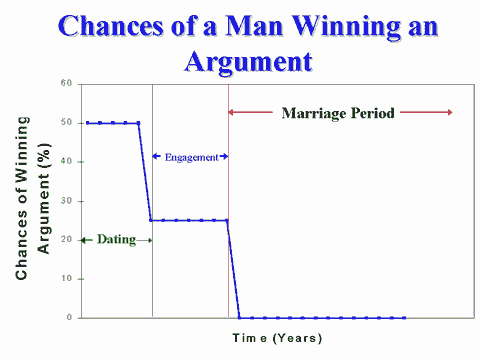
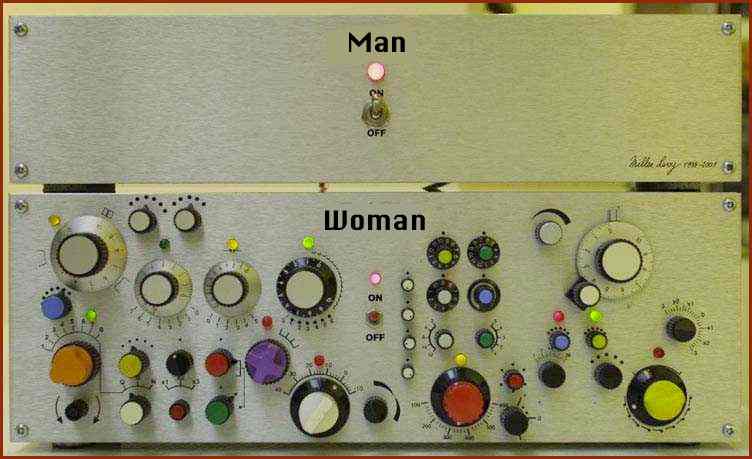
Man vs Woman (In Pictures)

Hilarious!! My wife sent them to me


WARNING: there were no copyright notice in the email, I hope I am not violating any :-)

Monday, November 13, 2006

Mathematical Formulae

Ever wondered how large the jungle of Mathematics is? We'll I always loose my way in it, when I try to read through a paper. Mathematics, to me is the plain simple truth, that is put in abstract terms. You get reward points for being terse. It's elegant when you write a premise in one single step. I've been thinking about coming up with a list of simple theorems, I want these to serve as an aid for mapping the more inner paths of the Mathematics jungle.

I have been trying to study discrete mathematics for a while now. Here is one of the most important theorems (see The Art of Computer Programming, Volume 1, Page 41, Third Edition, D.E.Knuth) . The theorem is called Fermat's Theorem and states that

If p is a prime number then


For a good proof, see Knuth's book or Fermat's Little Theorem at Wolfram MathWorld

One of the most interesting applications of this theorem is the RSA algorithm. RSA is used quite extensively in public/private key based cryptosystems.

Checkout the RSA article on Wikipedia

Thursday, November 09, 2006

Ten top things to do after installing a new Linux Distribution

Even though most of distributions have gotten better with look & feel and integration of hardware with Linux, here are the top ten things I usually do after installing a new distribution

  1. Fix the bootloader to set the order of booting the OS
  2. Get the right fonts
  3. Download media players like real or helix and mplayer
  4. Download and install a DVD player
  5. Install Java and the Java Plugin
  6. Install Acrobat Reader
  7. Install Acrobat Flash Plugin
  8. Install TeX, Scribus, Xfig and Inkscape
  9. Install wxMaxima and Scilab
  10. Install development packages like Eric, Kdeveloper & Eclipse
Remember, installing an entirely new distribution requires a lot of patience, googling and sleep. I'll try and walk you through the nuances of the various distributions available. My favourite these days is Ubuntu. It's a great distribution built on top of another great distribution (debian).

Tuesday, November 07, 2006

Symmetry

The book Discover Physics by Benjamin Crowell, talks about symmetry in Physics and in Nature. Wikipedia defines symmetry as

"In formal terms, we say that an object is symmetric with respect to a given mathematical operation, if, when applied to the object, this operation does not change the object or its appearance. Two objects are symmetric to each other with respect to a given group of operations if one is obtained from the other by some of the operations (and vice versa)"

Of the various types of symmetry described in the article, I find the reflection symmetry and rotation symmetry, the easiest to understand.


Reflective Symmetry


Rotation Symmetry
The interesting thing about symmetries is that they apply not only to nature, physics and mathematics, but to computing as well.
Consider that you are writing an API or developing a programming language or a library. By design, you the code needs to be able to undo, what it's allowed to do.
Consider a "C" program
Let's say we carry out the following steps


1. Allocate memory
2. Copy from user
3. Open a file
4. Write to file


What happens in case there is an error in step 4?
We carry out the following steps


1. Close the file
2. Free the allocated memory


We need to do the same when our we are done writing to the file.

Now compare what we did with reflection symmetry. Did you find anything similar? I think we should as a guideline make our API/code symmetric with respect to reflection. In lay man's terms, the code should be able to undo its own effect.

Most programming languages and API are symmetric. "C" has malloc()/free(), open(), close(). "C++" has a constructor and a destructor for each class, so we are mostly good as far as this rule is concerned. "Java" on the other hand, provides a garbage collector to maintain the symmetry. Consider what would happen if you could just allocate memory and never free it up? Open files, but never close them? The system would soon become unstable, the weight would grow on one side (memory, descriptor leaks) and the system would crash.

The symmetry created by the garbage collector makes life easy for the lazy programmer, but losing control over symmetry can throw a system in a non-deterministic state. Consider the case where a system has a lot of memory, the garbage collector never kicks in (of-course a lot depends on the actual algorithm). When a critical application needs to run, it needs most of memory, but to get free memory, the garbage collector starts running, starving the critical application of CPU time, making it wait for its memory demand. All of this could have been avoided (the CPU time overhead), but being in control of symmetry and freeing the memory when not needed.

Coming to rotational symmetry, I am yet to find a good use case for it in computer science (for an average programmer). For those involved in graphical illustrations, we could exploit it to make it easier to draw illustrations.

privacy

Some of the policy from the app automation refers to https://rclone.org/privacy/ if you are a general blog reader, follow Google's polic...